
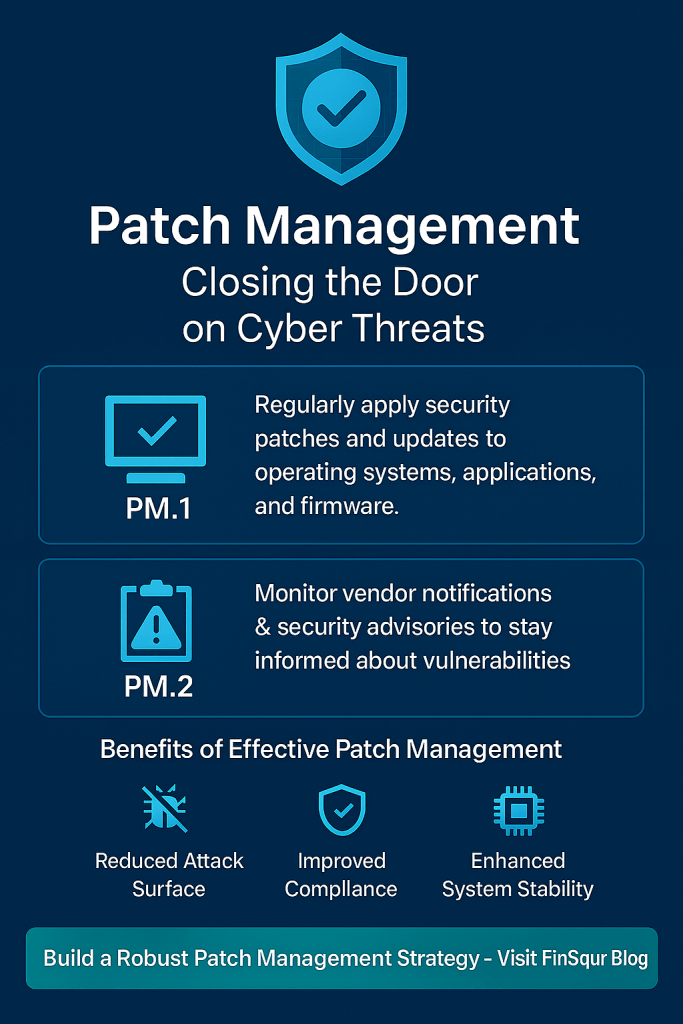
Patch Management is one of the most critical cybersecurity practices, yet it’s often underestimated. Every day, vendors release patches to fix vulnerabilities that attackers exploit. Ignoring these updates can leave your systems exposed to ransomware, data breaches, and compliance violations.
This comprehensive guide explains why patch management matters, best practices, compliance requirements, real-world examples, and answers common questions.
Why Patch Management Matters
Unpatched systems are a hacker’s playground. According to industry reports:
- Over 60% of breaches occur due to missing patches.
- Attackers exploit known vulnerabilities within days of disclosure.
- Regulatory frameworks like ISO 27001, NIST, and CERT-In mandate timely patching.
FinSequr’s Patch Management Best Practices
PM.1: Apply Security Patches Regularly
- Update operating systems, applications, and firmware promptly.
- Automate patch deployment where possible to reduce human error.
- Schedule maintenance windows for critical updates to minimize downtime.
PM.2: Stay Informed About Vulnerabilities
- Monitor:
- Vendor notifications
- Security advisories
- CERT-In alerts
- Subscribe to trusted threat intelligence feeds.
- Maintain a patch inventory and prioritize based on severity.
Benefits of Effective Patch Management
- Reduced Attack Surface: Close known vulnerabilities before attackers exploit them.
- Improved Compliance: Meet regulatory requirements and avoid penalties.
- Enhanced System Stability: Patches often include performance improvements.
Real-World Example
In 2017, the WannaCry ransomware attack exploited a known vulnerability in Windows systems. Organizations that applied Microsoft’s patch immediately were safe, while others faced massive disruptions and financial losses.
Lesson: Timely patching can prevent catastrophic breaches.
FinSequr Case Study: Ransomware Attack on Indian Banks (August 2024)
In August 2024, a massive ransomware attack crippled payment systems at nearly 300 small Indian banks, causing widespread disruption and financial loss. The attack targeted C-Edge Technologies, a technology service provider for cooperative and rural banks.
What Happened?
- Attackers exploited a known vulnerability (CVE-2024-23897) in a misconfigured Jenkins server used by Brontoo Technology Solutions, a partner of C-Edge.
- This vulnerability allowed attackers to gain unauthorized access and deploy ransomware across multiple banks simultaneously.
- Payment systems were encrypted, leaving thousands of customers unable to complete transactions or access funds.
Impact
- NPCI (National Payments Corporation of India) had to isolate C-Edge from its payment network to contain the damage.
- The breach disrupted banking operations for rural and cooperative banks, impacting millions of customers.
- Financial losses ran into millions of dollars, and reputational damage was severe.
Root Cause
The vulnerability exploited had a patch available, but it was not applied in time. This highlights the critical role of timely patch management in preventing such attacks.
Lessons Learned
- Regular patching of systems and third-party applications is non-negotiable.
- Vendor risk management is essential—banks must ensure their technology partners follow strict patching protocols.
- CERT-In advisories and vendor notifications should be monitored continuously.
FinSequr suggested Compliance Requirements
- ISO 27001: Requires documented patch management processes.
- NIST SP 800-40: Recommends automated patching and vulnerability prioritization.
- CERT-In Guidelines: Mandate monitoring advisories and applying patches promptly.
FAQ: Common Questions About Patch Management
Q1: How often should patches be applied?
A: Critical patches should be applied immediately; others can follow a scheduled cycle.
Q2: Is automated patching safe?
A: Yes, if tested properly. Always validate patches in a staging environment before production.
Q3: What if a patch breaks my system?
A: Maintain backups and rollback plans as part of your patch management strategy.
Resources for Further Reading
FinSequr Insight
Patch management is not just an IT task it’s a business-critical security control. By implementing a structured patching process, you safeguard your organization against evolving cyber threats.
Call to Action
Want to build a robust patch management strategy? Visit FinSequr.com for more cybersecurity insights or contact our experts today.
 FinSequr
Leave a comment